Perfectionism therapy in Seattle.
It worked. That is the hard part. Perfectionism is not a character flaw. It is a solution you found early, in a place where love arrived with conditions, and it worked. That is exactly why it is so difficult to set down now.
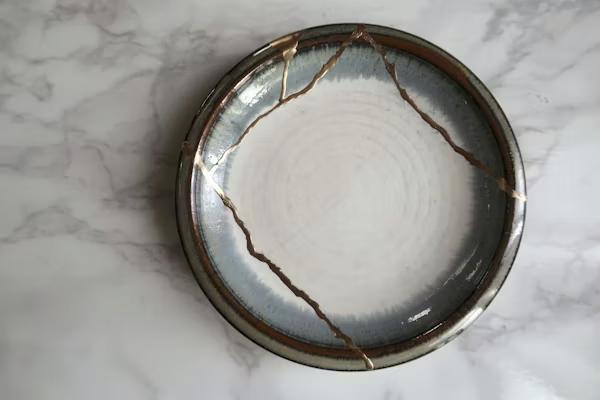
Somewhere young, you did the math. If I am flawless, I will be safe. If I am impressive, I will be kept. If I never give them a reason, they cannot leave. And you were right. Being good got you something that being ordinary did not.
So you got very good. You still are. That was never the problem, and perfectionism therapy is not about making you worse at your life.
The problem is the cost, which does not come due until much later. The self-monitoring that never turns off. The rest that arrives with guilt attached. The small mistake that somehow becomes evidence about who you are. The particular loneliness of being admired for a version of yourself that no one has actually met. Many high achievers call this imposter syndrome, though the fear underneath it is usually older than any job.
Marion Woodman wrote that children who were not fully received often turn to perfection as a substitute for love. That is worth sitting with. The drive to be flawless is rarely vanity. It is usually a bid for something that should have been free.
Where perfectionism comes from
Perfectionism grows in environments where love, safety, or attention were tied to performance. Sometimes that environment was openly demanding. More often it looked fine from the outside and was quietly empty underneath: a child praised for achievement and not for feeling, seen for what they did and not for who they were.
A child in that position is not making an error. They are reading the room correctly and adapting to it. Performance was the currency that bought connection, so they learned to earn. That lesson does not expire when you leave home. It follows you into the job, the relationship, the Sunday afternoon when you cannot stop making lists.
For some people this traces back to a parent who could not receive them, what many now call the mother wound, or to the kind of emotional absence that had no name when you were small. For others it came from the culture, the school, the industry, or a family under too much pressure to notice anyone's inner life. The particular source matters less than the lesson that got learned.
Why perfectionism therapy with skills alone has not held
You may have tried therapy for this already. You may have learned to challenge the thought, reframe the standard, practice the self-compassion exercise. Some of that helps. And you have probably noticed that it did not reach the thing underneath, because you can become excellent at self-compassion the same way you became excellent at everything else.
Tools work on the surface of a pattern. This pattern is not on the surface. It is load-bearing. It is holding something up. That is why depth therapy for perfectionism starts somewhere else entirely.
How I work with perfectionism in depth therapy
Slowly, and in relationship. As a depth therapist in Seattle, I do not treat perfectionism as a habit to be corrected. Here is roughly what the work looks like.
First, we get curious about what it is protecting. Not to dismantle it. Perfectionism is usually standing in front of something, and until we know what, taking it away would be reckless. So we start with the question the drive has been answering all along: what were you afraid would happen if you stopped? Usually there is a specific fear underneath, and it is older than your job.
We go back to where the math got done. Not to assign blame, but because the strategy made sense somewhere. When you can feel the logic of the child who built it, the whole thing softens. It stops being evidence of something wrong with you and becomes a record of what you survived.
We work with what happens between us. Perfectionists often arrive at therapy prepared, insightful, easy to work with. If you find yourself doing that with me, we can be curious about it together rather than treating it as something to catch. There is nothing you have to perform here. Not even healing. Over time, being received without earning it is the thing that actually changes the pattern, because it disconfirms the original math directly.
We include the body, because perfectionism lives there. The shoulders that never come down. The breath that stays shallow all day. The exhaustion that sleep does not touch. Your body has been keeping score of the performance and will often register the shift before your mind agrees to it.
We make room for what is underneath. Often it is grief. For the childhood spent auditioning. For the years of being admired and unknown. Perfectionism is very effective at outrunning that grief, which is part of why it is so hard to stop moving. Slowing down is what lets the feeling arrive, and the feeling is the door.
What changes in perfectionism therapy
Not your standards. You can keep those. People are often afraid this work will make them worse at their lives, and it does not.
What changes is what the standards are carrying. Right now your worth is riding on them, which is why a small mistake can take down your whole sense of yourself. When that weight comes off, the same care and precision are still available to you. They just cost less. You get to be good at things because you like being good at things, not because the alternative is unbearable.
People also describe becoming easier to be close to. When you no longer need to be impressive, other people get to be real with you too.
What if being enough has nothing to do with what you produce?
Common questions about perfectionism therapy
Will therapy make me less ambitious?
No. This is the fear almost everyone brings, and it does not happen. Your standards are not the exhausting part. Your worth riding on them is. When that weight lifts, the same precision is still available to you.
Is perfectionism the same as anxiety or OCD?
They overlap and they are not the same. Perfectionism often produces anxiety, and for some people it is entangled with obsessive patterns. What I work with is the relational history underneath the drive rather than the symptom alone. If something closer to OCD is present, I will say so and help you find the right care.
How long does this take?
Longer than a protocol and shorter than forever. Perfectionism is usually decades old and load-bearing, so we move at a pace your system can tolerate. Most people notice something shifting within a few months, often first in their body.
Do you offer perfectionism therapy online?
Yes. I see clients in person in Seattle and by telehealth throughout Washington State, including Bellevue, Tacoma, Olympia, Spokane, and anywhere else in the state.
Practical details
Sessions are $175, weekly, on Fridays between 8 AM and 4 PM. In-person in Seattle's Central District and telehealth throughout Washington State. I am out-of-network with all insurance panels and can provide superbills for possible out-of-network reimbursement.
I also work with tech burnout, anxious attachment, childhood emotional neglect, and the mother wound. These patterns tend to travel together.
If something here is resonating, I would welcome a conversation.
Book a Free Consultation